



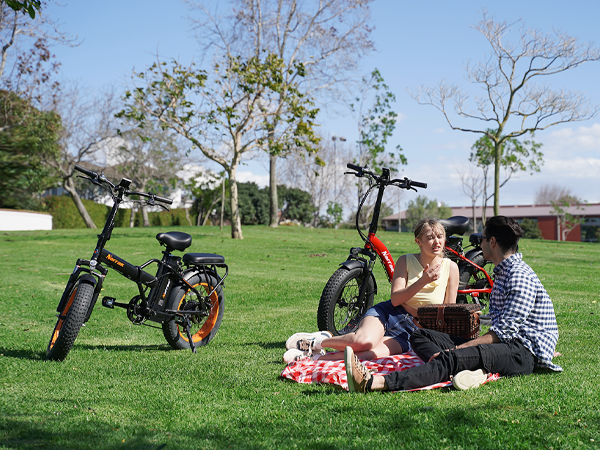
A Class 2 ebike assists up to 20 MPH with both pedal assist and throttle—the most bike-path-friendly option in most US states. A Class 3 ebike assists up to 28 MPH on pedal assist only (throttle typically capped at 20 MPH or disabled). Choose Class 2 for shared trails and senior comfort; choose Class 3 for faster commutes on roads. Narrak's M3, S127, and S129 reach 28 MPH; trikes like the N8 prioritize Class 2–style 20 MPH street comfort.
Class 2 vs Class 3 Ebike: Comparison at a Glance
Both classes are legally bicycles under the federal three-class system—but speed caps, throttle rules, and where you can ride differ enough to change your buying decision.
| Feature | Class 2 Ebike | Class 3 Ebike |
|---|---|---|
| Max assisted speed | 20 MPH | 28 MPH (pedal assist) |
| Throttle | Yes — full throttle to 20 MPH | Limited or disabled above 20 MPH in most states |
| Pedal assist | Yes — up to 20 MPH | Yes — up to 28 MPH |
| Motor wattage (typical) | ≤750W rated | ≤750W rated |
| Bike path access | Widest access in most states | Often restricted on shared paths |
| Helmet / age rules | Varies by state; often none | Helmet required for riders under 17 in many states |
| Best for | Trails, seniors, throttle starts, mixed-use paths | Road commutes, longer distances, time-sensitive riders |
What Is a Class 2 Ebike?
A Class 2 ebike is an electric bicycle with a motor that stops assisting at 20 MPH, whether you pedal or use a twist or thumb throttle.
Under the PeopleForBikes three-class framework—adopted by 38+ US states as of 2026—a Class 2 ebike must have:
- Operational pedals — you can always ride it as a regular bicycle
- Motor ≤750W rated — peak output may be higher on hills, but the rated motor stays within the standard
- Assistance cut-off at 20 MPH — motor stops helping once you hit the cap, on throttle or PAS
- Full throttle capability — the defining Class 2 feature; no pedaling required to move
Class 2 is the default choice when bike path access matters. Many municipalities allow Class 1 and Class 2 on shared trails but ban Class 3 because the 28 MPH assist speed closes the gap with mopeds. For seniors and riders who want a low-effort start from a stoplight, the throttle is the practical advantage—not raw top speed.
Narrak's electric trikes—N8, N6, and N3—ship configured for 20 MPH street comfort, aligning with Class 2 expectations for neighborhood riding and shared paths. Browse the full electric tricycle collection for stability-focused options.
What Is a Class 3 Ebike?
A Class 3 ebike (also called a "speed pedelec" in Europe) provides pedal assist up to 28 MPH—eight miles per hour faster than Class 2, which materially shortens commute times.
Key Class 3 rules under the standard model law:
- 28 MPH pedal-assist cap — motor assists only while you are pedaling, up to 28 MPH
- Throttle restrictions — in adopting states, throttle-only operation is typically limited to 20 MPH or removed entirely on Class 3 bikes
- Speedometer required — Class 3 bikes must display current speed to the rider
- Stricter path rules — Class 3 is often excluded from bike paths, greenways, and some sidewalk-adjacent lanes
The 8 MPH difference sounds small on paper. On a 5-mile commute, Class 3 at 28 MPH saves roughly 3–4 minutes versus Class 2 at 20 MPH—meaningful if you ride daily or cover 10+ miles each way. Class 3 also keeps pace with urban traffic on 25 MPH posted roads, reducing the gap cars exploit when passing.
Narrak's 28 MPH–capable models—the 1100W moped-style M3 with dual suspension, folding S127 and S129, and off-road S180 with hydraulic differential—fit the Class 3 use case for riders who primarily use roads and want faster arrival times. See the fat tire and off-road ebike lineup and electric mountain bike collection for terrain-specific Class 3 picks.
When to Choose Class 2 vs Class 3: Decision Tree
Your riding environment—not motor wattage—should drive the class decision. Use this framework before comparing specs.
Choose Class 2 if you…
- Ride on bike paths or greenways — Class 2 has the broadest trail access in adopting states
- Want throttle-only starts — helpful at intersections, for knee issues, or when carrying cargo
- Prioritize stability over speed — electric trikes at 20 MPH feel planted; 28 MPH on three wheels demands more attention
- Are a senior or new rider — lower speed reduces reaction-time pressure; trikes like the 55-mile-range N8 trike are built for this profile
- Live in a Class 3–restricted municipality — some cities ban 28 MPH assist on all but designated bike lanes
Choose Class 3 if you…
- Commute on roads posted 25–35 MPH — 28 MPH assist keeps you visible and reduces unsafe passing gaps
- Cover 8+ miles one way daily — the time savings compound over a week
- Ride off-road or on private property — speed caps matter less where path rules do not apply
- Want a moped feel without gas — models like the M3 deliver motorcycle-inspired styling at Class 3 speeds
- Already own a slow Class 2 and need an upgrade — switching to 28 MPH often eliminates the need for a second vehicle on short trips
Which Narrak Models Map to Class 2 vs Class 3?
Hardware capability and default configuration differ. This table shows where each Narrak model fits the class framework in 2026—not legal classification, which also depends on how you configure assist and throttle limits.
| Model | Type | Top Speed | Best Class Fit | Ideal Use |
|---|---|---|---|---|
| M3 | 2-wheel fat / moped-style | 28 MPH | Class 3 | Road commute, urban speed, off-road trails |
| S127 | 2-wheel folding fat | 28 MPH | Class 3 | Compact storage + fast road riding |
| S129 | 2-wheel folding fat | 28 MPH | Class 3 | Folding commuter, car-trunk transport |
| S180 | 2-wheel off-road / dual motor | 28 MPH | Class 3 | Steep trails, hydraulic differential grip |
| N8 | 3-wheel fat trike | 20 MPH | Class 2 | Seniors, cargo, neighborhood paths |
| N6 | 3-wheel folding trike | 20 MPH | Class 2 | Compact trike, balance support, errands |
| N3 | 3-wheel entry trike | 20 MPH | Class 2 | Budget stability, first-time trike riders |
Class 3 Pick
For riders who need 28 MPH on roads and want maximum value, the 28 MPH Class 3–capable ride with 1100W peak and dual suspension under $700 covers commute speed, fat-tire grip, and moped-style presence in one package.
Class 2 Pick
For path-friendly stability without balancing, the 20 MPH electric trike with 55-mile range and UL-certified battery is the strongest Class 2–oriented option in Narrak's lineup—ideal for seniors and neighborhood errands.
Narrak S180 — 28 MPH With Hydraulic Differential
The S180 targets riders who need Class 3 speed on technical terrain. Dual motors with a hydraulic differential send power to the wheel with traction—critical on loose gravel and wet climbs where a single-motor bike spins out. At 28 MPH on fire roads and private trails, it fills the gap between a slow Class 2 commuter and a gas-powered dirt bike.
✔ Verdict: Best Class 3 pick for off-road riders who want differential grip without leaving the ebike category.
Shop S180 →State & Local Rules: What Changes by Location
Federal law treats ebikes as consumer products—not motor vehicles—but state and local governments set where each class can ride. This section covers general US patterns, not legal advice.
As of 2026, 38+ states have adopted some version of the three-class model law. Common patterns:
- Bike paths — Class 1 and Class 2 typically allowed; Class 3 often banned or limited to adjacent road lanes
- Sidewalks — all classes usually prohibited for adults; local exceptions exist
- Helmets — Class 3 frequently requires helmets for riders under 16 or 17; some states require them for all Class 3 riders
- Age minimums — Class 3 riders under 15 or 16 may be restricted in adopting states
- Registration & insurance — not required for any class in adopting states; non-adopting states may differ
States that have not adopted the model law may classify ebikes differently—sometimes lumping all motorized bikes under moped rules. California, New York, and Texas follow the three-class system with local amendments; always verify your city ordinance before riding Class 3 on a shared path.
Class 2 vs Class 3 Ebike FAQ
What is the main difference between Class 2 and Class 3 ebikes?
Speed and throttle rules. A Class 2 ebike assists up to 20 MPH with both pedal assist and a full throttle. A Class 3 ebike assists up to 28 MPH on pedal assist, with throttle typically capped at 20 MPH or disabled. Class 3 is faster on roads; Class 2 has broader bike path access.
Can I ride a Class 3 ebike on bike paths?
It depends on your state and municipality. In most adopting states, Class 3 is restricted from shared bike paths because 28 MPH assist speeds overlap with motor vehicle traffic patterns. Class 1 and Class 2 generally have wider path access. Check your local ordinance—some cities allow Class 3 on designated commuter corridors only.
Do I need a license for a Class 3 ebike?
In the 38+ US states that adopted the three-class model law, no driver's license, registration, or insurance is required for Class 2 or Class 3 ebikes—as long as the bike meets class definitions (operational pedals, ≤750W rated motor, speed caps). Non-adopting states may have different rules; verify locally.
Can I convert a Class 2 ebike to Class 3?
Many ebikes allow speed limit adjustments in the display settings—raising assist from 20 to 28 MPH effectively shifts the bike into Class 3 territory. However, doing so may void path access privileges and trigger helmet or age requirements in your state. If your bike already supports 28 MPH (like the S127), configure the limit to match where you actually ride rather than maxing speed by default.
Is a Class 2 or Class 3 ebike better for seniors?
Conclusion
The Class 2 vs Class 3 ebike decision comes down to where you ride, not how many watts the motor peaks at. Choose Class 2 (20 MPH, throttle + PAS) for bike paths, senior comfort, and throttle-assisted starts—Narrak's N8, N6, and N3 trikes are built for exactly this. Choose Class 3 (28 MPH PAS) for road commutes and time savings—the M3, S127, S129, and S180 deliver 28 MPH with fat-tire grip and LA-warehouse shipping.
Local laws vary—confirm path and helmet rules in your city before configuring assist speed. Every Narrak model ships free from Los Angeles with 30-day returns and a 1-year warranty.
Free shipping from Los Angeles · 30-day returns · 1-year warranty · UL certified batteries
Shop Class 2 & Class 3 Ebikes →
Share:
Budget Electric Dirt Bike Guide
Off-Road Electric Bike Guide